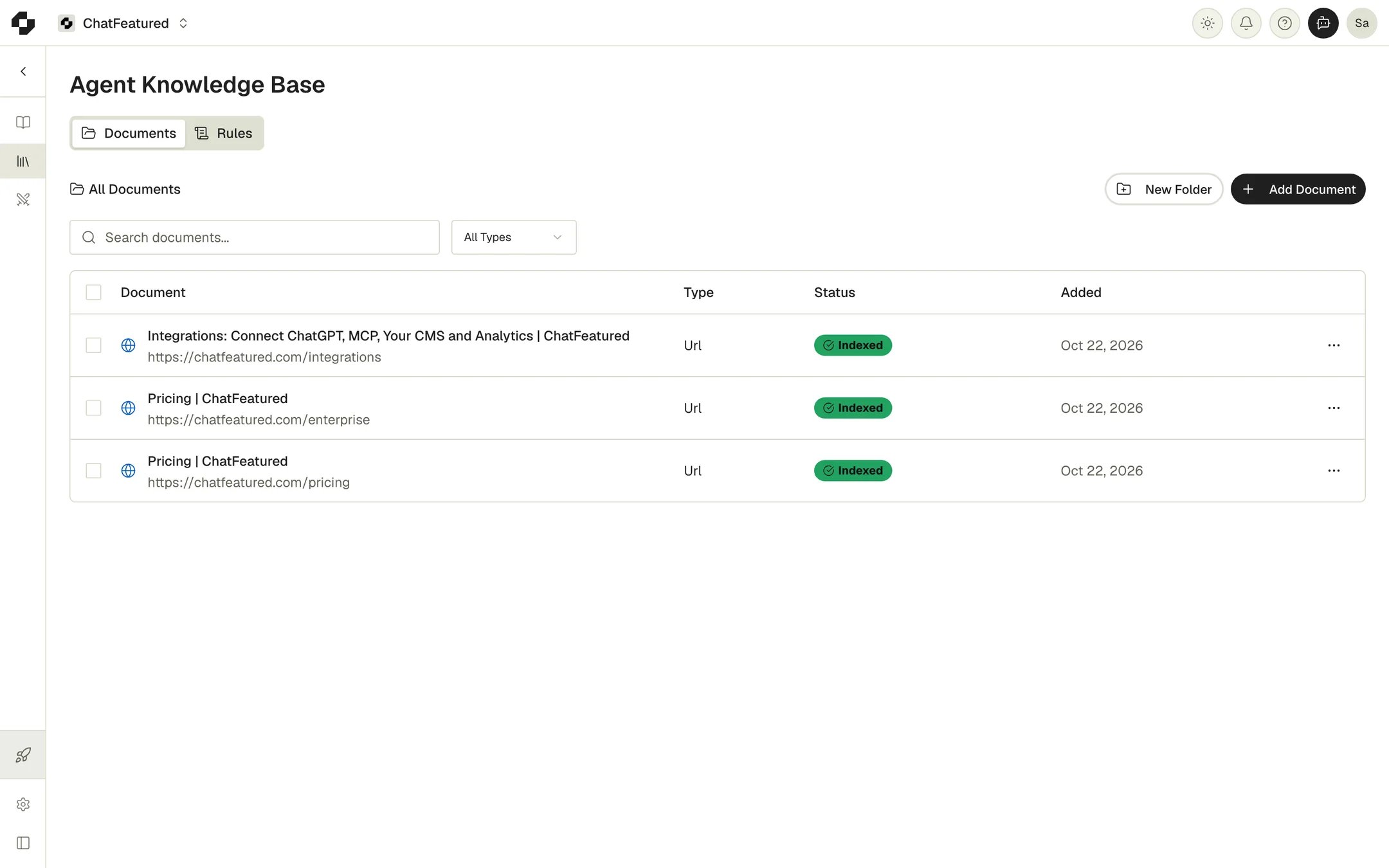
The Knowledge Base stores information about your company, products, and brand that AI agents use when generating content. The more context you provide, the more accurate and on-brand the generated content becomes.

Primary Use Case: Content Generation

The biggest benefit of the Knowledge Base is improving content generation. When the Content Agent or Writing Agent creates articles, it pulls from your Knowledge Base to:
  • Write in your brand voice - Match your tone, terminology, and messaging
  • Include accurate details - Reference correct product features, pricing, and capabilities
  • Address your audience - Tailor content to your specific customer profiles
  • Highlight differentiators - Emphasize what makes you unique

Associating Knowledge with Articles

You can link specific Knowledge Base entries to individual articles:
  1. When creating or editing an article, select Knowledge Base items to include
  2. The selected items provide focused context for that specific article
  3. The agent uses this context when generating or refining content
This is especially useful for product-specific content where you want the agent to reference particular features or positioning.

Using Knowledge in Chat

When chatting with agents during article editing:
  • Reference Knowledge Base content in your prompts
  • Ask the agent to incorporate specific information
  • The agent can pull relevant context to answer your questions

What to Include

Focus on information that helps agents generate better content:

Company Overview

  • Company description - What you do and who you serve
  • Mission and values - Your brand’s purpose and positioning

Products and Services

  • Product descriptions - What each product does
  • Key features - Differentiating capabilities
  • Use cases - How customers use your offerings
  • Pricing overview - Tiers and positioning (value, premium, etc.)

Target Audience

  • Customer profiles - Who buys your products
  • Industries served - Verticals you focus on
  • Pain points - Problems you solve

Competitive Positioning

  • Key differentiators - What makes you unique
  • Competitive advantages - Where you excel vs alternatives
  • Win/loss insights - Why customers choose you

Brand Voice

  • Tone of voice - How you communicate (professional, casual, technical)
  • Key messages - Core talking points to emphasize
  • Terminology - Preferred terms and phrases to use

Adding Content

Text Entries

  1. Go to Knowledge Base in the sidebar
  2. Click Add Entry
  3. Choose a category
  4. Enter your content
  5. Click Save

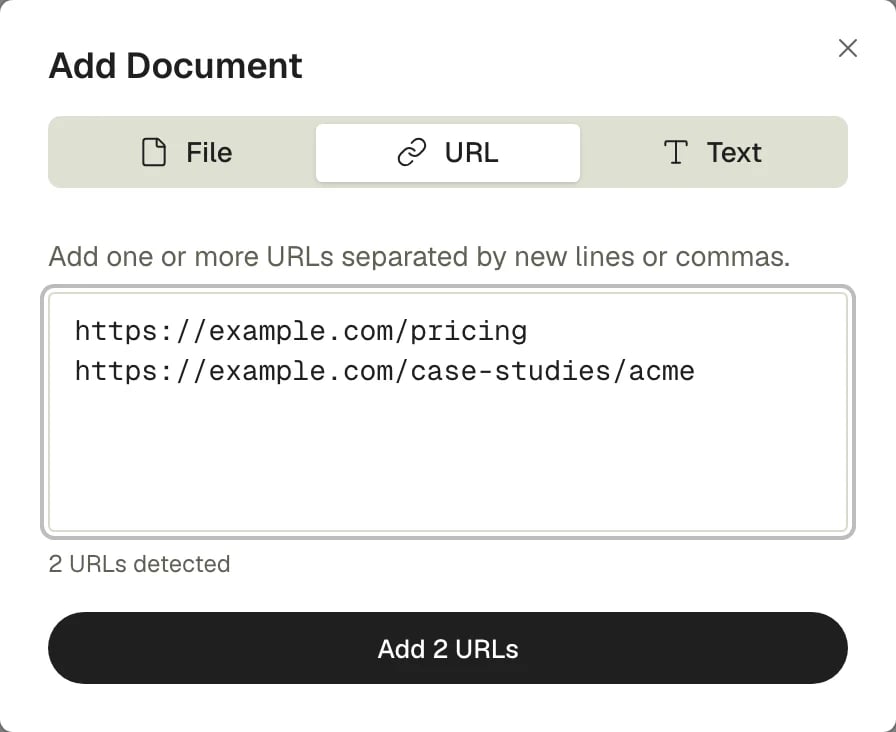
Import from URL

Pull content from existing pages:
  1. Click Import from URL
  2. Enter a URL (about page, product page, documentation)
  3. Content is extracted and added
  4. Review and edit as needed

File Upload

Upload existing documents:
  1. Click Upload File
  2. Select a document (PDF, DOCX, TXT)
  3. Content is extracted and categorized
Start by importing your About page and main product pages. This gives agents solid foundational context quickly.

How Agents Use Knowledge

Content Agent

Uses your Knowledge Base to:
  • Generate article outlines based on your products
  • Write content in your brand voice
  • Include accurate product details and positioning

AEO Agent

Uses your Knowledge Base to:
  • Tailor optimization recommendations to your specific situation
  • Suggest content topics aligned with your offerings
  • Provide relevant competitive context

Example

Without Knowledge Base:
“Create an article about CRM features.”
With Knowledge Base:
“Create an article about CRM features for growing sales teams, emphasizing our quick onboarding process and affordable pricing that resonates with mid-market companies.”

Keeping Knowledge Current

Update your Knowledge Base when:
  • Products or features change
  • Pricing or positioning updates
  • New competitive intelligence emerges
  • Brand messaging evolves
Outdated information can lead to inaccurate content. Review your Knowledge Base periodically and remove old product info or positioning that no longer applies.

Best Practices

  1. Start with fundamentals - Company description, main products, target audience
  2. Add brand voice guidelines - Help agents match your communication style
  3. Include differentiators - What makes you unique should come through in content
  4. Link relevant items to articles - Use specific context for specific content
  5. Update regularly - Keep information accurate as your business evolves